Spain and Portugal Plunge Into Darkness: What We Know About the Widespread Power Outage

A never-before-seen power outage caused widespread disruption across Spain and Portugal on Monday, halting train services, disrupting telecommunications, and turning off traffic signals and ATMs for millions throughout the Iberian Peninsula.
The Iberian Peninsula is inhabited by over 50 million individuals spanning both Spain and Portugal. The precise number of those impacted remains unclear since officials chose not to disclose detailed data.
Power outages impacted numerous heavily populated city regions. In Spain, significant hubs such as Madrid, Barcelona, Seville, Ávila, Murcia, Galicia, Alicante, and Zaragoza experienced these issues. Similarly, Portugal’s biggest metropolitan centers, Lisbon and Porto, faced comparable difficulties.
The cause of the blackout is still unclear, however multiple officials have dismissed the possibility of sabotage. "As of now, there are no signs of a cyberattack," European Council President António Costa stated in an X posting.
Spanish power distributor Red Eléctrica declined to speculate on the cause of the power outage that began around 12:30 pm Madrid time and said restoring power fully could take six to 10 hours.
Eduardo Prieto, the head of operations, informed reporters that this situation was unheard of, describing the occurrence as "extraordinary and exceptional."
Late at night, through various social media channels, Spanish Prime Minister Pedro Sánchez informed everyone that they have managed to restore 50% of the country’s electricity supply. He reassured citizens that every available state resource was being utilized to combat the situation and find a resolution.
"We will work tirelessly throughout the entire night with professionalism and dedication, just as Spain consistently does in such circumstances," Sánchez penned.
In the meantime, Portuguese Prime Minister Luís Monteiro stated that government employees continue to work diligently to reinstate connections in the impacted regions.
"We maintain continuous communication with security agencies, civil defense organizations, military units, medical facilities, and fuel suppliers to guarantee our readiness in critical infrastructures and assistance to those requiring help," stated Montenegro in an update posted on X.
Sections of southern France were likewise affected for a short time, however authorities report that the service was swiftly resumed following a prompt intervention.
Sánchez said a “strong oscillation” in the European grid was behind the outage but the cause was still being determined. He asked the public to refrain from speculation, and urged people to call emergency services only if really necessary.
It marked the second significant electrical grid failure in Europe within six weeks following the blaze at Heathrow Airport in the UK on March 20th.
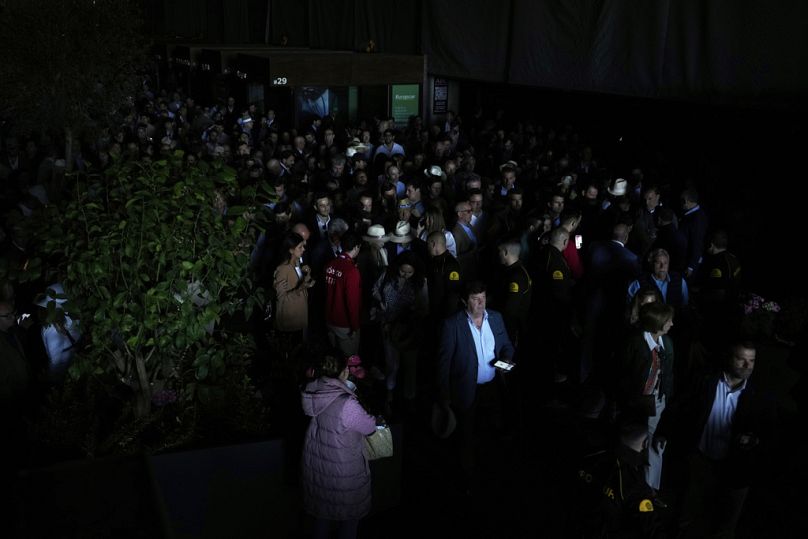
The disruption started post-noon. Workplaces shut down, leading to gridlock in large urban centers. Civilians in Barcelona took charge of directing the congested streets. Both nations' railway operations halted, resulting in countless travelers being left stranded.
Spain's Transportation Minister Oscar Puente stated on social media that even if power was restored later on Monday, it would not be feasible to resume train services.
In Madrid, numerous individuals gathered at a bus stop used for traveling to the airport attempted to get rides from passing vehicles. Many waved makeshift signs in hopes of persuading drivers to pick them up.
Hospitals and other emergency service providers transitioned to generator power. Those hit hardest included bedridden patients who relied on oxygen equipment. Fuel stations ceased operations as well.
Making calls or sending text messages was largely impossible across most of the mobile phone networks; however, a few individuals were able to use specific messaging applications with sporadic data service. In an effort to remain updated, many turned to searching shops for battery-operated radios.
A chart displayed on Spain’s electrical grid website revealed a significant decline in national power demand shortly after 12:30 PM, plummeting from approximately 27,500 megawatts down to nearly 15,000 megawatts.
According to Aena, which operates 56 Spanish airports such as those in Madrid and Barcelona, the country’s airports were functioning using backup power systems, leading to some flight delays.
In Lisbon, terminals shut down and visitors waited outdoors for updates regarding their flights.
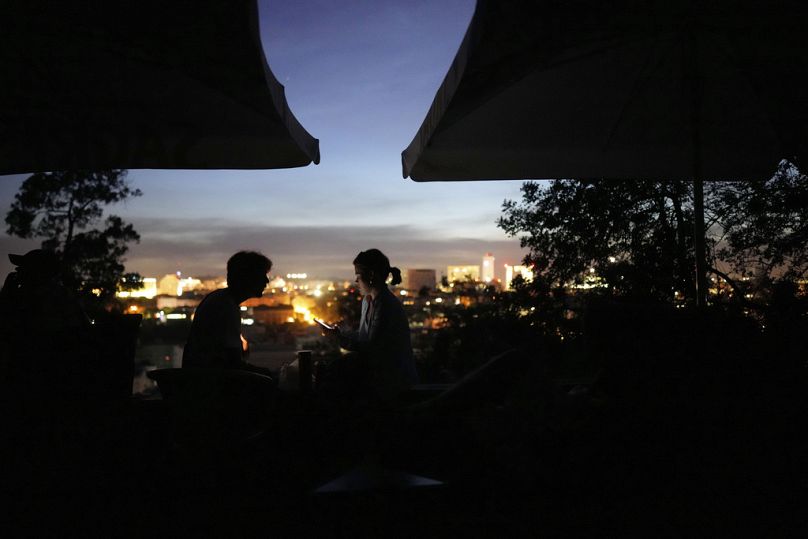
The Spanish Parliament in Madrid has been shut down. The tennis matches at the Madrid Open were put on hold. Many individuals seized this opportunity due to poor internet connections to bask in the sun at outdoor café patios, public parks, and sandy shores. Meanwhile, Barcelona's thoroughfares teemed with crowds gathered outside shuttered shops, sharing updates with one another.

Sanchez called for an urgent session of the National Security Council. Four Spanish regions announced a state of emergency and requested that the central administration in Madrid assume control of the crisis response.
The Portuguese Council of Ministers held an urgent gathering at the prime minister's official residence. Montenegro mentioned that he had communicated multiple times with Sánchez and anticipated that electricity would be reinstated by the conclusion of the day.
Lisbon stated that the outage seemed to originate from issues beyond national borders.
Electricity was drawn from Morocco and France to bring power back to southern and northern Spain, observed Sánchez, expressing his gratitude to their respective governments.
Spain was likewise boosting output from hydroelectric and combined cycle thermal power facilities.