ANSWERS TO READERS: Which Was the First Film Based on a Musical?

- Do you have a question for which you're seeking an answer? Alternatively, do you possess the answer to any of these questions?
- Send your correspondence to: Charles Legge, Replies to Readers, Daily Mail, 9 Derry Street, London W8 5HY or email him at charles.legge@.co.uk
What was the earliest movie adaptation of a stage musical?
In 1927, "The Jazz Singer" brought an end to the silent film era. This movie included six well-known songs sung by Al Jolson.
Musical films quickly gained popularity, and in 1929, numerous movies tailored for cinema screens emerged. Notable among these was the Academy Award–winning "The Broadway Melody," along with productions like "Gold Diggers of Broadway" and "Sunny Side Up."
On April 17, 1929, an initial adaptation of "Show Boat" was unveiled. Unlike later versions inspired by the popular Florenz Ziegfeld Jr.-produced Broadway show, this one originated from Edna Ferber’s novel published in 1926.
Nevertheless, numerous songs from the Jerome Kern and Oscar Hammerstein II musical were included in a special prologue that was added to the film prior to its release.
Rio Rita, released on September 15, 1929, was adapted from the 1927 Broadway show produced by Ziegfeld, featuring music composed by Harry Tierney and lyrics penned by Joseph McCarthy. The film tells a lighthearted tale of Texas Captain James Stewart, a ranger, chases the outlaw known as 'The Kinkajou' across the Mexican border and finds himself falling for Rita, the bandit's sibling.
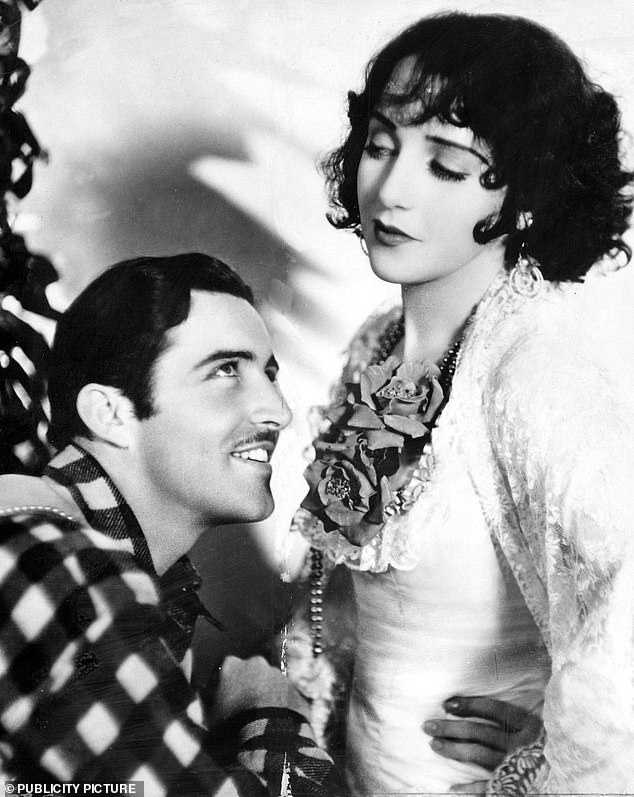

The movie marked Bebe Daniels’ (as Rita) debut in talking pictures; John Boles played the character Stewart, and it also propelled the cinematic careers of the comedic pair Wheeler & Woolsey. One of its most recognizable songs was The Rangers' Song.
In 1929, two additional films originating from Broadway musicals were released. "Paris," featuring Irene Bordoni, premiered on November 7th and was derived from a 1928 Cole Porter stage show. Another film titled "Sally" made its debut on December 23rd; this one stemmed from a 1920 production staged by Ziegfeld, crafted by Guy Bolton and incorporating verses penned by P.G. Wodehouse.
Paul Weston, Redditch, Worcs
I've come across information suggesting that wave mechanics might allow for the existence of a universe alongside our own. Is this concept feasible?
What does 'truth' mean, and is this equivalent to 'reality'? In science, one develops a hypothesis based on present observations. This hypothesis is subsequently employed to forecast the outcomes of fresh experiments or observations aimed at rigorously testing the hypothesis itself. Should the hypothesis prove successful, it becomes recognized as the prevailing explanation—essentially considered 'the truth.' However, this status remains provisional unless later evidence refutes it.
In certain experiments, photons of light seem to exhibit properties of particles, while in others they display wave-like behaviors, and occasionally both simultaneously. However, direct observation of a photon is not possible; our only means of studying them is through their impact on surrounding elements.
This could also apply to parallel universes or multiple dimensions. These concepts may help elucidate enigmas at the farthest reaches of physics, like why gravity is significantly weaker compared to other basic forces of nature, for instance, electromagnetism.
However, without being observable, they stay as merely a mathematical tool instead of something tangibly real.
Ken Wood, Newport, Gwent
QUESTION: Why do FC Metz go by the nickname the Graoully Dragons? Can you also mention some other unusual team names used globally?
FC Metz, a French football club, goes by two nicknames: Les Grenats (The Maroons) and Les Graoullys.
According to local lore, Saint Clement of Metz defeated a fearsome wingless dragon called the Graoully. This creature dwelled alongside numerous serpents within the town’s Roman amphitheater and often terrorized the inhabitants.
This symbolism representing Christianity’s triumph over paganism continues to be observed nowadays withprocessions where an effigy of the dragon is carried through the town in celebration.
In his younger years, the author François Rabelais was frightened by the graoully’s massive eyes, gigantic head, gaping mouth, and crushing teeth. This creature continues to be a significant emblem for the town, featured in the cathedral and incorporated into the heraldry of both the local football and ice hockey clubs.
The Zacatepec soccer team in Mexico are called the Sugarcane Producers due to their green and white striped jerseys (green representing the local sugarcane, white symbolizing the sugar). The Spanish club Cádiz is nicknamed the Yellow submarine.
Various nicknames reflect key industries nearby. For instance, Malaga is known as the Anchovies due to its proximity to the fishing sector. Similarly, Alemannia Aachen goes by the Potato Beetles because of their shirt design reminiscent of insects with stripes. Meanwhile, Spain’s Leganés FC has earned themselves the moniker of the Cucumber Growers.
Less commonly, Hartlepool United FC’s moniker, the Monkey Hangers, stems from an apocryphal tale suggesting that locals in the town once executed a monkey, mistaking it for a French spy during the Napoleonic Wars.
Ian MacDonald, Billericay, Essex
Read more