Sixties Vibes Revived: Behind the Wheel of the Extended VW ID.Buzz LWB

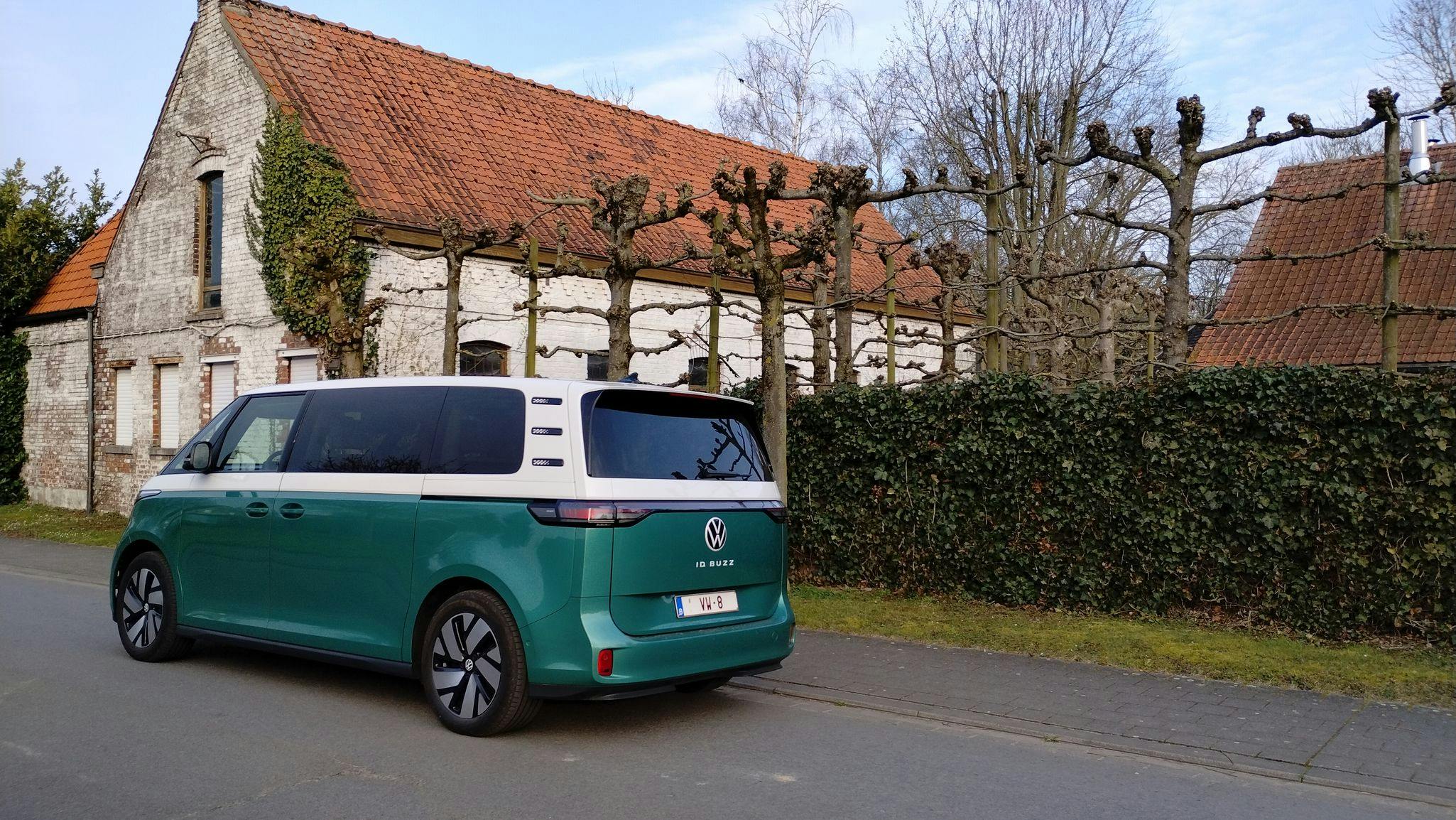
It’s impossible to overlook the Volkswagen ID.Buzz; particularly due to its distinctive two-tone paint job that harks back to its iconic predecessor from the 1950s and '60s. However, this modern version graces us in the 21st century as an electric vehicle.
Before the introduction of the LWB version, the ID.Buzz was offered primarily as a five-seater designed for family use in Europe. However, this limitation has been addressed with the launch of the new ID.Buzz LWB model. The term "LWB" stands for "long wheelbase," which indicates an extended chassis providing an additional 25 centimeters compared to the original design.
This enhancement allows the vehicle to accommodate seven actual seating positions along with storage space and increased driving range. Consequently, the updated ID.Buzz features a battery capacity of 86 kilowatt-hours (measured at the usable level) or 91 kilowatt-hours when considering total capacity, representing an increase of 7 kilowatt-hours over the conventional model equipped with similar powertrains. Although this increment may seem modest, every bit counts towards improved performance.
We will revisit these details later since they play a crucial role during our journey today. Now we're set to experience firsthand what it feels like behind the steering wheel of this compact yet spacious four-meter-ninety-six-long van cruising through the picturesque landscapes surrounding Kortrijk in Belgium’s Western Flanders region.
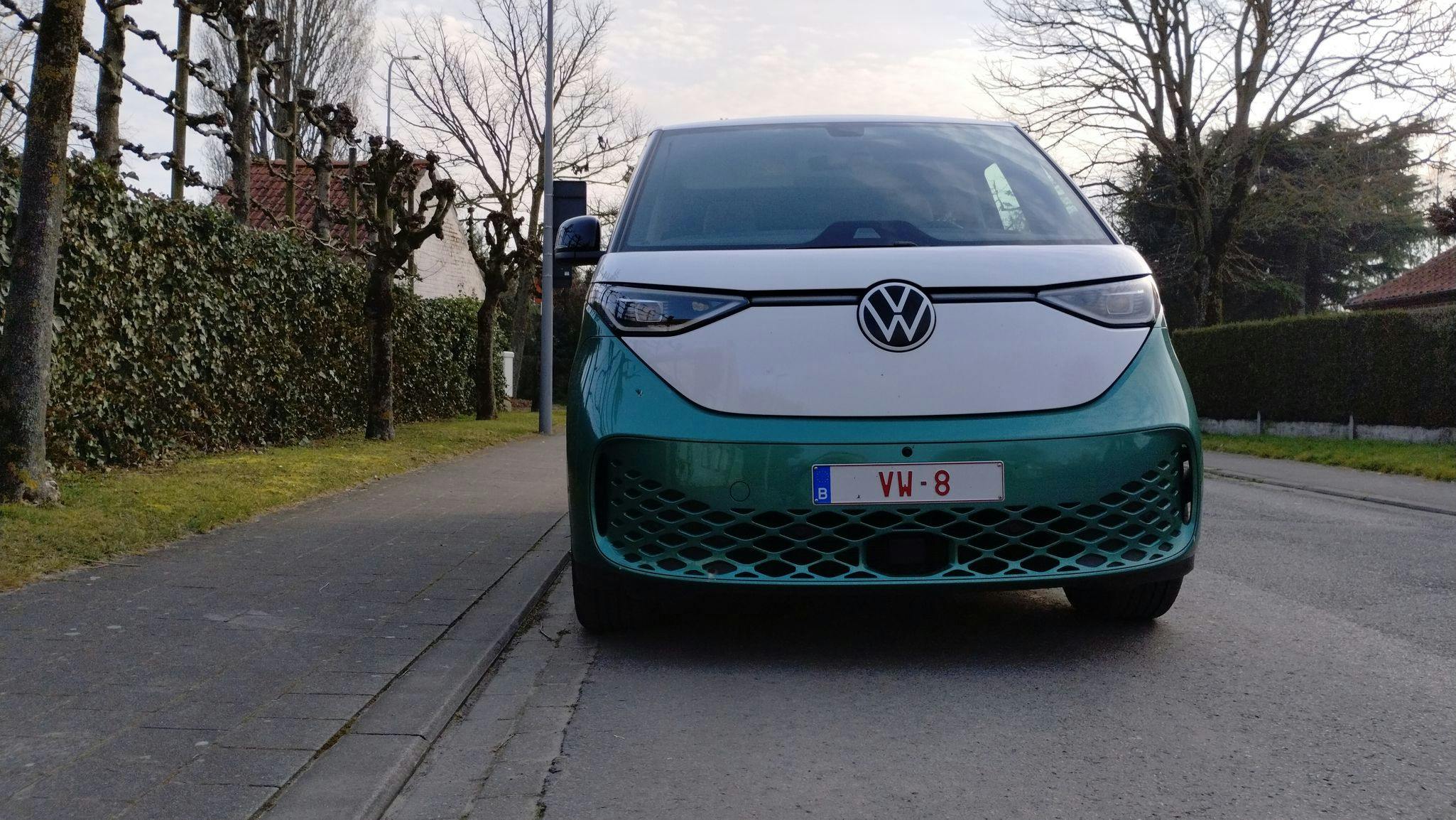
Combi bus
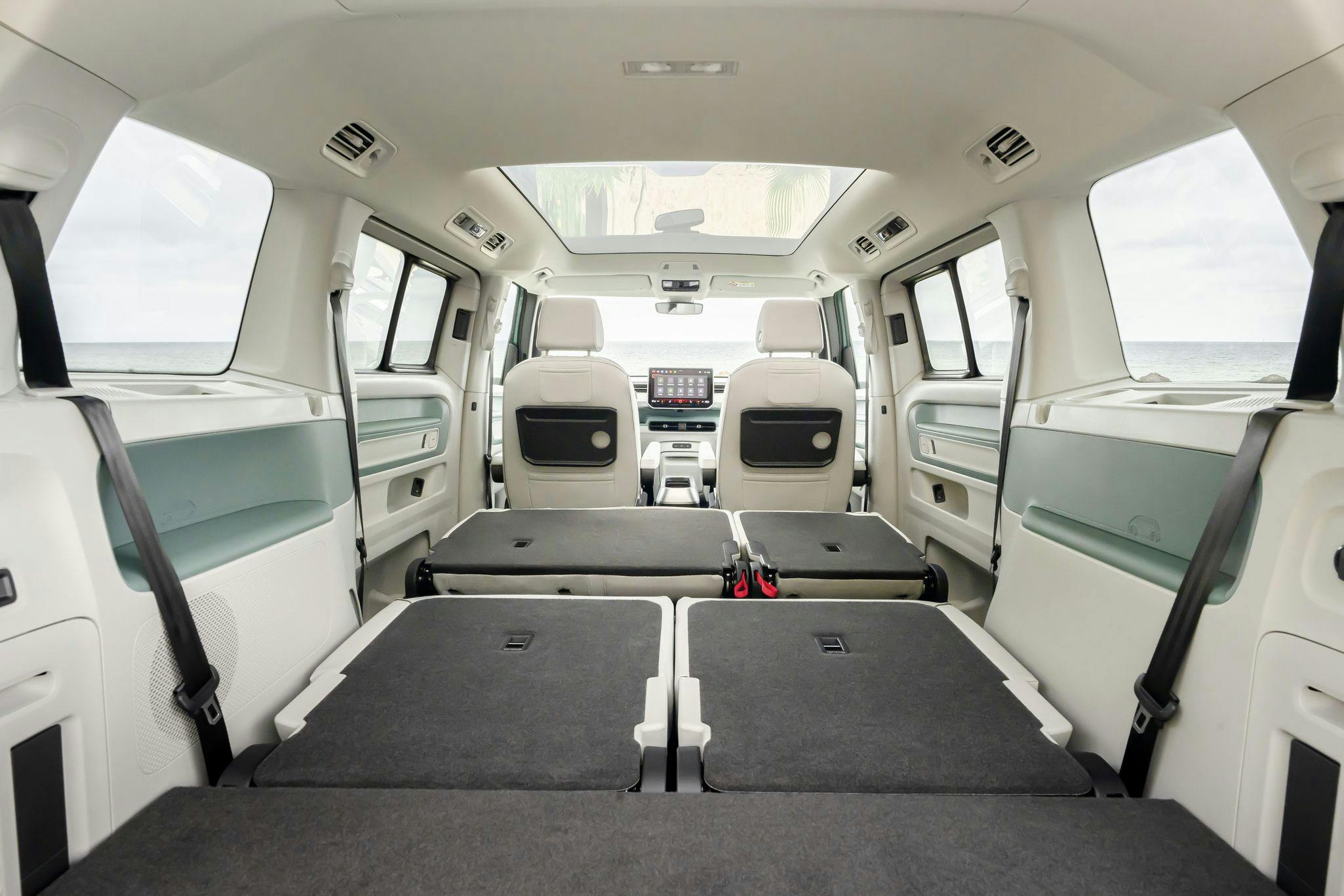
Initiating this journey requires pressing down the brake pedal and manually shifting the gear lever located behind the steering wheel. As soon as we do so, surrounded by envious glances from bystanders appreciating the neo-retro aesthetic of our compact vehicle, we set out feeling quite proud—almost wanting to return their looks with a surfer’s gesture. Given that tonight marks the start of what feels like an adventure, we'll camp overnight using inflatable mattresses following a lively gathering where we’ll supply the music. Consequently, besides myself and my trio of companions who squeezed into the trunk area—with the back-row seats collapsed—the various items packed include duffels, suitcases, air beds, sleeping bags, amplifiers, loudspeakers, along with a sizable container holding cords and microphones—and let's not forget about the disco ball! All these belongings comfortably stowed under the hatchback (an electric option available) over designated compartments meant for essential supplies such as first-aid kits and warning triangles, all without needing to remove the cargo lid. However, setting up microphone stands required positioning them at the rear seat level. Additionally, considering the design allows entry via the side-sliding door (also optional as an electrical feature), accessing the final seating arrangement involves folding those same rear seats forwards—an effortless process indeed.
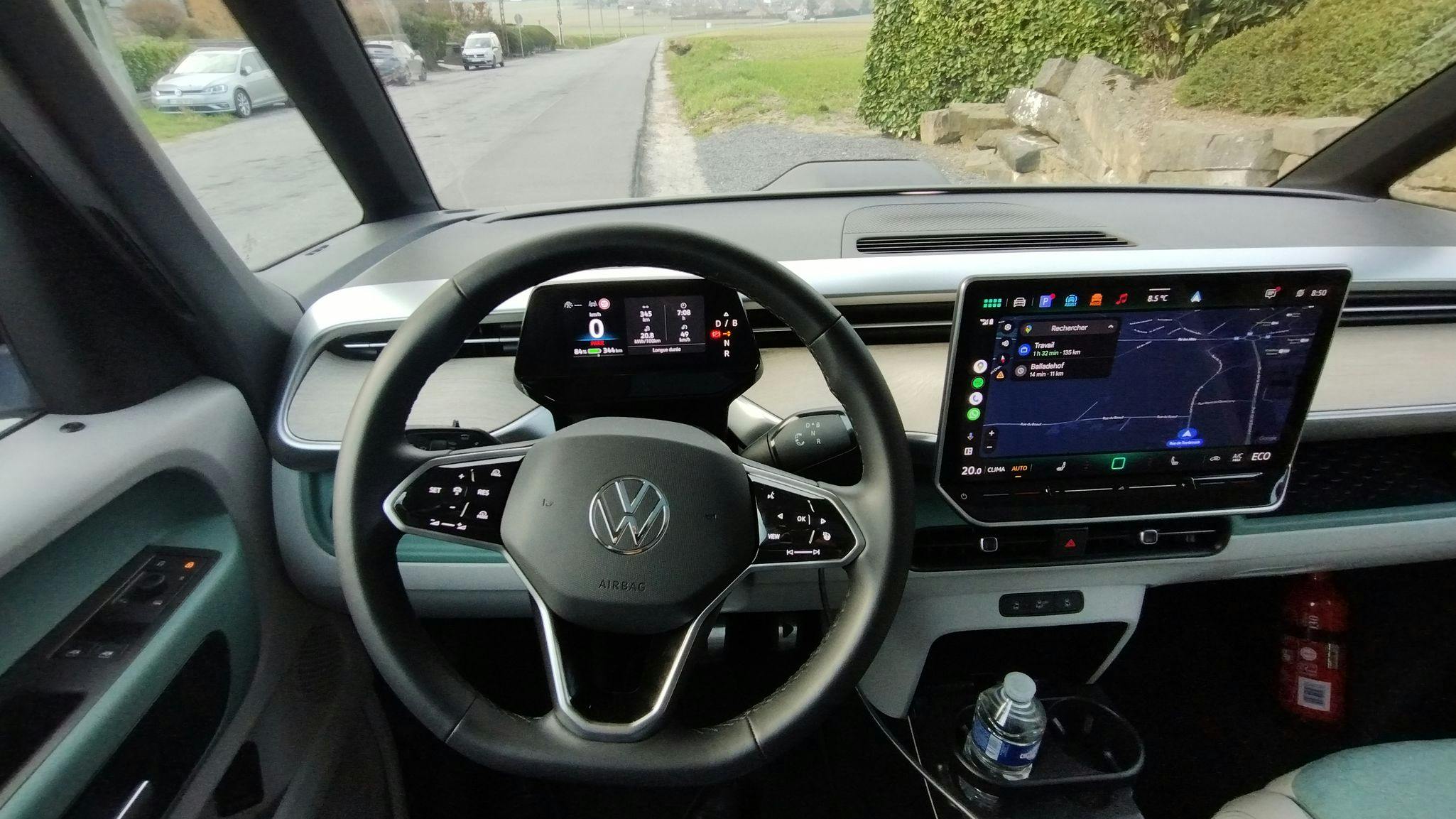
Holiday Atmosphere
Sitting in the driver’s seat on the right side, you face an extensive dashboard that seems never-ending. This expanse offers little usability. However, fortunately, there is a glove box positioned before the passenger, just above another storage space known as the glove compartment. Similar compartments can be found scattered around the interior of the vehicle. Smartphones have their designated spot too; a slot located close to the steering column sits atop two USB-C ports. Yet these are not essential should your device support wireless charging since the console includes an induction charger. Additionally, both the front-seat occupant and rear passengers benefit from individual USB-C connections. Despite being predominantly made of plastic, connectivity within this welcoming atmosphere remains comprehensive.
For adjusting light levels, the electrochromic panoramic sunroof allows alteration of transparency through swiping across a touch-sensitive zone embedded in the ceiling liner—a feature that adds some interactive flair. Moreover, insulation provided by the acoustic glass—yes, available at extra cost—creates such a serene ambiance inside that sounds like those emanating from intoxicated individuals become barely noticeable. Interestingly enough, even when the engine operates silently, tranquility prevails aboard this vehicle.
Tchiki boum
Could you picture the stereotypical scene of individuals swaying to music, moving about in their emerald and ivory coach? This described our experience during the trial (despite none of us actually being part of such a crowd). The ID.Buzz promotes relaxed discovery. On highways too, the road feels transformed. With 286 horsepower (210 kW) at the back wheels, we assert dominance over traffic and claim the far-left lane as ours. Thanks to its impressive torque of 560 Nm, accelerating becomes effortless; it achieves zero to one hundred kilometers per hour in just 7.9 seconds when pressed correctly. Top speed reaches up to 160 km/h. Yet, handling curves and circles requires caution because of how bulky this machine can feel despite having a lower center of gravity aided—or perhaps hindered—by the hefty battery pack. Despite resembling an oversized milk carton, Volkswagen has refined the aerodynamic design enough to make extended trips feasible, enhanced further by the introduction of a fuel-efficient variant within the VW ID lineup designed specifically for these adventures.
Traveller
In rural areas, one might achieve energy consumption under 19 kWh per 100 km. However, maintaining this efficiency becomes challenging above speeds of 100 km/h, where the average typically rises past 23 kWh per 100 km. Fortunately, we experienced mild springlike temperatures during our journey, allowing us to aim for about 300 kilometers on highways and potentially surpass 400 kilometers overall. Regardless of the time of year, planning rest stops every two hours on the highway is advisable; these could extend beyond 2.5 hours depending on favorable conditions. Upon reaching a charging point, align the vehicle’s rear-right side close to the electrical outlet. Although the peak charge rate reaches up to 200 kW, both the charger station's hardware and your vehicle’s onboard systems determine the effective output—such as possibly settling at 125 kW. Consequently, prepare for roughly half an hour needed to regain approximately 200 km worth of battery life unless winter conditions prevail.
For colder months, consider optional features like heated rear seats and windshield de-icing functions to enhance comfort.
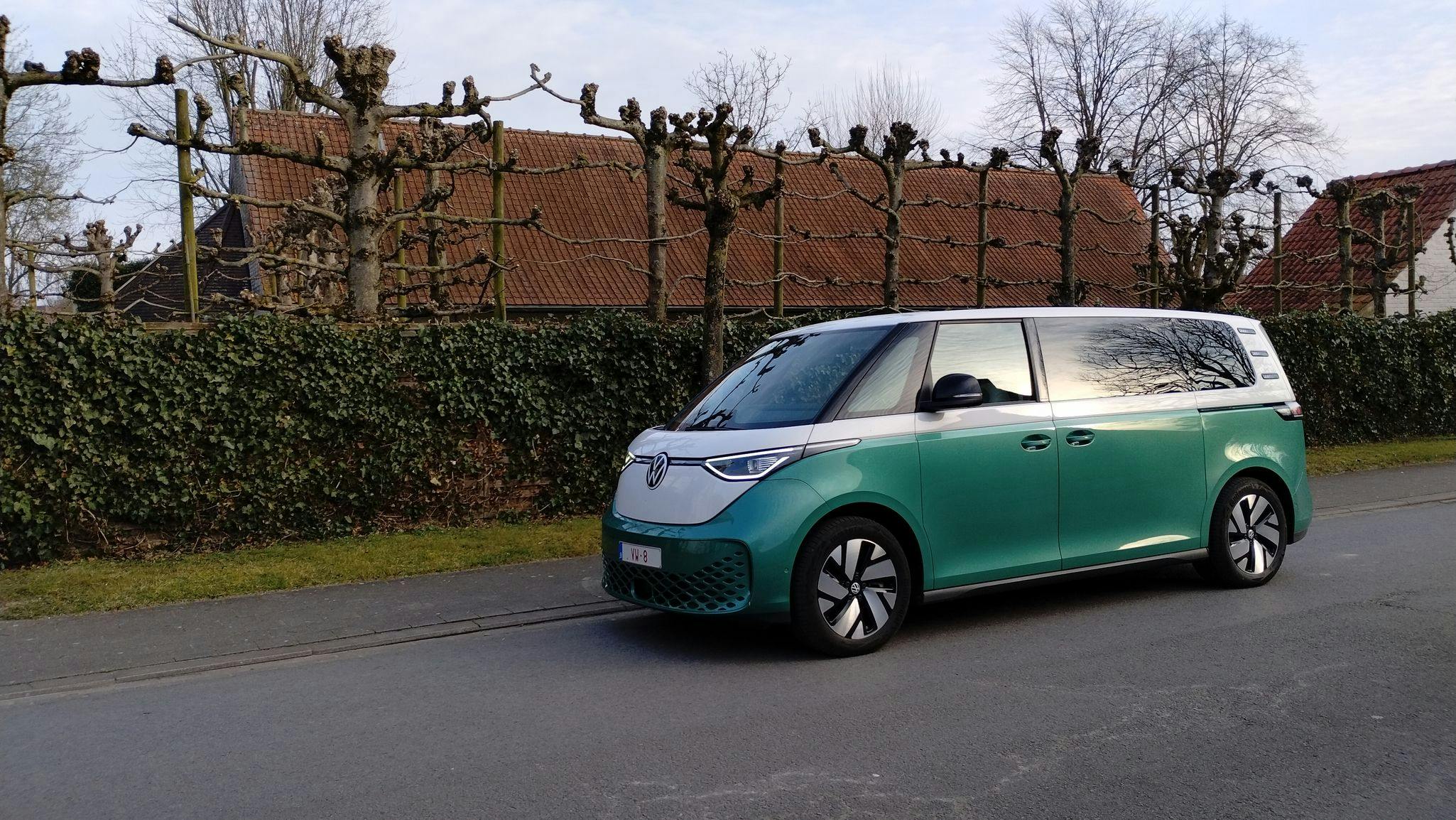
Limited weight
Whether you're heading out for a camping trip or dropping off items at the recycling center, towing a trailer becomes an option due to its electric tow hitch capable of handling up to 1000 kg. However, be cautious as adding passengers would bring your total load over 3.5 tonnes; thus, requiring a suitable driving license. There's also something important to keep in mind regarding overall capacity: the vehicle has a maximum authorized gross weight of just 3340 kg. Therefore, fitting seven rugby players along with their equipment inside isn’t feasible since doing so could exceed these limits.
When folding down every seat transforms the ID.Buzz into a spacious cargo carrier offering up to 2469 liters of storage space—more than enough for most daily needs but still insufficient for large-scale moves. Primarily designed as a comfortable family car rather than a utility truck, it excels more in providing amenities like seating comfort and atmospheric interior lights tailored towards enjoyable trips and regular commutes alike. Additionally, the detachable touchscreen interface facilitates seamless connectivity for both entertainment and navigational purposes.
Lastly, even though it might seem challenging given the dimensions, maneuvering within urban environments remains manageable thanks to features such as rearview cameras which significantly ease tasks like parallel parking—a task simplified further whenever there’s ample clearance measuring around five-and-a-half meters available.
The Painful Price
The extended-wheelbase ID.Buzz is fantastic. Its design as a minibuss is both appealing and enjoyable to drive. With an impressive 86kWh battery, it opens up opportunities for outings and journeys with minimal sacrifice. However, during colder months, you might want to adjust your expectations somewhat. Priced at a minimum of €62,000 including VAT for the version with 286 horsepower, this extends beyond the shorter variant which starts at around €56,000 equipped similarly but with a smaller 79 kWh battery.
Our test unit from Belgium, featuring various upgrades such as the pro line package priced at €1,657 for entertainment systems, another set valued at €3,091 enhancing comfort features, additional components like sliding doors and an electronic liftgate adding €3,130 more, plus dual-toning costs, advanced driver assistance technology costing €2,585, along with luxurious interiors amounting to €4,114—brought our total expense to approximately €85,722! That certainly packs quite a punch!
In comparison, over in France, anticipate spending roughly €58,400 for their seven-passenger ID.Buzz Pro edition. Meanwhile, Swiss customers will find themselves paying about 71,000 CHF for the base configuration of the longer wheelbase model within the same range. Lastly, Canadians would be looking at nearly $81,000 CAD before they could call one theirs. Quite steep indeed!
(MH with Olivier Duquesne – Source: Volkswagen – Images: © Olivier Duquesne & Volkswagen)