China Unveils Service Robot Data as Humanoid Sector Booms

The Chinese government’s statistical department has added a new metric for "service robots" within its monthly industrial production report, alongside the pre-existing "industrial robots" classification, providing a more transparent picture of the nation's expanding robotics sector .
Although China leads globally in industrial robotics with more than half of worldwide installations, its service robot industry—encompassing professional, consumer, and medical applications—is experiencing rapid growth. This expansion is driven partly by startups like those based in Hangzhou. Unitree Robotics and Shenzhen-based UBTech Robotics .
The National Bureau of Statistics (NBS) reported on Monday that the production of service robots in China—used for duties such as deliveries and cleaning—surged by 35.7 percent to almost 1.5 million units during the initial two months of this year.
Are you looking for insights into the most significant issues and developments globally? Find your answers here. SCMP Knowledge Our updated platform features handpicked content including explainer articles, FAQ sections, detailed analyses, and informative infographics, all provided by our prestigious award-winning team.
Service robots surpassed industrial robots in terms of growth and production. According to NBS data, from January to February, the output of industrial robots amounted to 91,088 units, marking a 27 percent rise compared to the previous year.
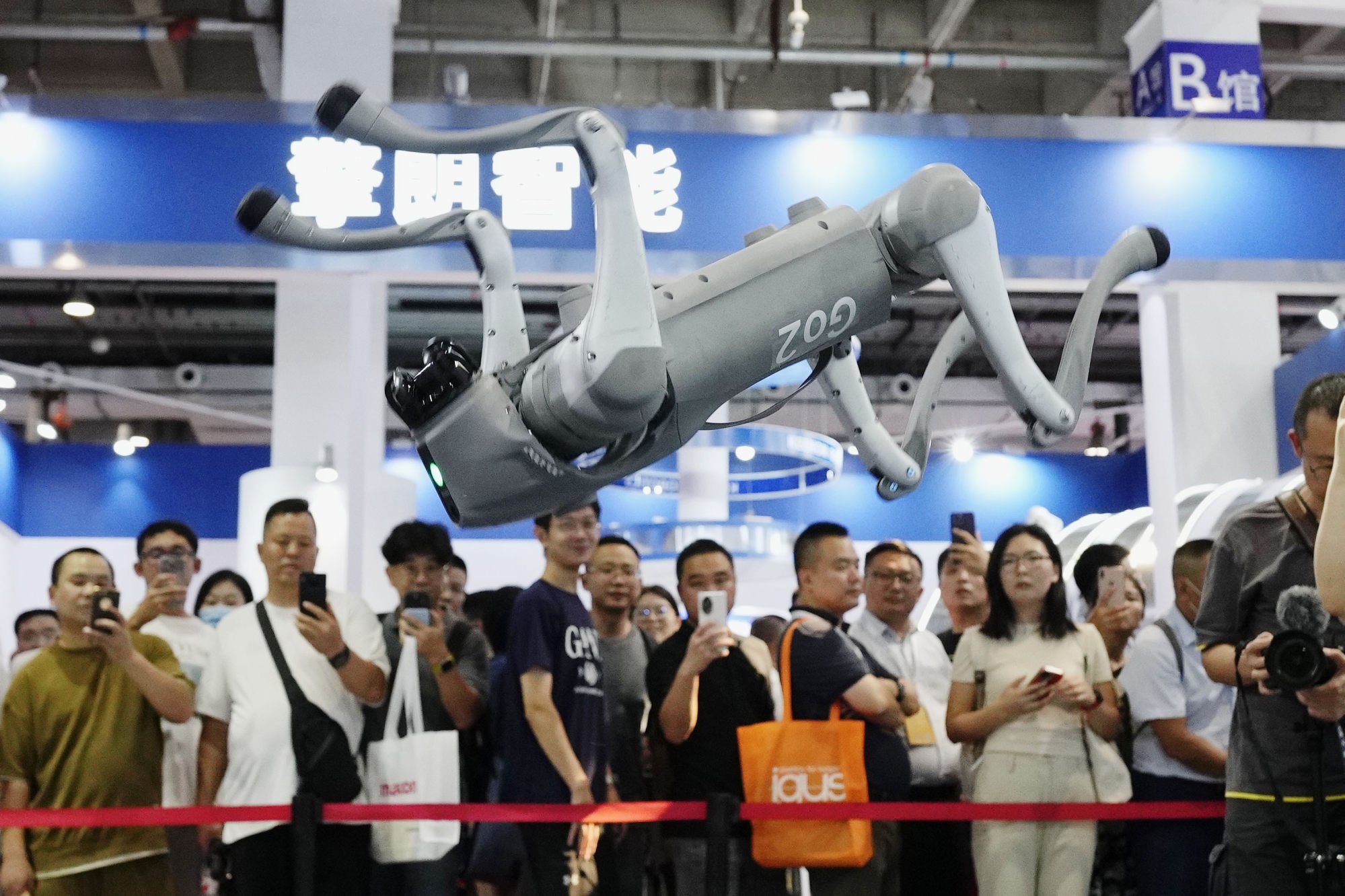
According to a statement made by NBS statistician Sun Xiao, the cumulative production from these sectors, including industrial control computers and systems, led to a 9.1 percent increase in the value addition of digital product manufacturing.
The move by the statistics bureau to release information about service robot production highlights the rising significance of robotics within China’s economy. As these robots become more prevalent across various sectors such as hospitality and education, they are driving a rapidly expanding industry with significant growth prospects.
In recent years, Chinese companies specializing in cleaning robots—a key segment within service robots—have experienced significant growth. According to market research firm IDC, in 2024, Roborock from Beijing outpaced the U.S.-based industry leader iRobot in terms of unit shipments.
In the ranking of the leading five cleaning robot producers from the previous year, four spots were occupied by Chinese companies: Roborock, Ecovacs Robotics, Xiaomi, and Dreame. iRobot secured the second position with a worldwide market share of 13.7%, just behind Roborock’s 16%.
The Chinese government has been placing increased importance on the robotics industry. During the recent sessions of the nation's principal legislative and consultative bodies, this was highlighted in their newest work report. the "two sessions" For the first time, the phrase "embodied intelligence" was introduced. This concept pertains to the deployment of artificial intelligence within tangible systems like robots.
The field of robotics has likewise drawn interest. substantial attention from venture capitalists In the initial two months of the year, approximately 2 billion yuan (US$276 million) in fresh investment was distributed among human-like robot creators through 20 separate funding rounds. This represents a significant rise compared to the 1.2 billion yuan garnered from just four deals during the same period the previous year, as reported by ITJuzi, a venture capital marketplace analytics firm.